


Recent Blog Posts
Who Gets the Dog After a Divorce?
Dogs, cats, and other pets are wonderful additions to families and are often considered “children” by some of their owners. A person going through divorce may want to do everything in his or her power to ensure the dog stays with him or her after the marriage is officially dissolved.
All of this begs the question as to where the law comes down on how to treat dogs and other pets during a divorce. The answer may shock you. Courts treat pets as any other piece of property couples need to divide during a divorce, even if they are living, breathing, furry property.
That being said, there are some courts that take a more compassionate stance on the issue of where the pets end up after a divorce but at the end of the day, they are legally defined as property. With a little understanding of Illinois divorce laws, individuals going through a divorce can get a better grasp of what to expect for their pet when seeking a dissolution of marriage.
Allocation of Parental Responsibilities Now Replaces “Child Custody” In Illinois
New laws have taken effect in Illinois that replace certain definitions concerning family law and how divorced, separated, or otherwise unmarried parents spend time with their children. Senate Bill 57 became law as of January 2016 and contains significant changes about how and when visitation is allocated, which may affect you.
To start, terms like custody, visitation, and access have been removed from the lexicon of family law courts and have instead been replaced with the terms “allocation of parental responsibilities” and “parenting time.” By changing the language used by parents, lawmakers hope to foster a higher degree of cooperation between parents as they raise their children in separate households.
Under the new law, neither parent is designated as the “residential custodial parent” however, a parent may be designated as having the residence for the school district where the child may attend school. The changes also do not automatically grant equal time amongst parents. What is important to understand is that the courts give parents opportunities to work out these arrangements with each other before the court becomes involved.
Calculating Maintenance (Alimony) Payments In Illinois
In January 2015, amendments to Section 504 of the Illinois Marriage and Dissolution of Marriage Act went into effect, which provide a streamlined process for calculating alimony payments. This recent change to the law provides guidelines for calculating maintenance in households earning a combined income of $250,000 or less per year.
If you have already agreed to a maintenance support payment schedule with your spouse before the law went into effect, you may not be able to change the maintenance amount or duration solely by virtue of the new law. However, with the aid of an attorney you may be able to petition the court to modify the maintenance payments should certain circumstances arise.
2016 Illinois maintenance payment calculator
Do I Still Have To Pay Child Support If I Lose My Job?
Under Illinois child support laws, parents are often required to make child support payments to provide for their children that live with the other parent. Unfortunately, with the tough economic times many face, retaining a well-paying job and making the required child support payments can be harder than ever.
If a parent is unable to make child support payments due to decreased hours or the loss of employment, he or she has options available to temporarily modify child support payments. Parties in these situations need to understand the proper steps to be taken to modify the support payments in court. Unilaterally modifying support payments without a court order could lead to an overwhelming backlog (arrearage) of payments, a finding of contempt, or even jail time.
Modifying child support payments during unemployment
When someone loses income, the very first move he or she should make is to consult with an attorney to ensure that a petition to modify support is swiftly filed with the court. Modifications of support cannot be made prior to the date of filing the petition to modify support.
Impact Of Social Media On Divorce Proceedings
As our world becomes more interconnected through technology and the internet, the prevalence of social media being used in divorce proceedings has increased drastically. More and more, divorce attorneys and their clients use information gathered on these types of sites to work towards their advantage.
Social media content can be used as evidence in divorce proceedings, so it is important to be mindful of what is posted. Judges often take this evidence into consideration to either corroborate or contradict a factual allegation made by a party to the divorce.
Should I shut down my Facebook account while going through a divorce?
When going through divorce, parties should strongly consider suspending their use of social media sites, particularly Facebook, until the proceedings are finalized. Even after a divorce is concluded, one party may be able to use certain information like photos and status updates to ask for modifications to maintenance, child support, parenting time or allocation of parental responsibilities.
Are Prenuptial Agreements Enforceable In Illinois?
Almost all couples go into marriage with the best of expectations, intentions that their union will last and the two will live long, happy lives together. However, sometimes things do not go as planned and the stress and obligations of modern life and marriage may take their toll on even the most loving couple.
Because of these pitfalls, some couples may consider crafting a premarital agreement or prenuptial agreement to plan for just such an event. Illinois is one of many states that allow couples to enter into private contracts to divide assets should the marriage be dissolved.
Illinois Uniform Premarital Agreement Act
The Uniform Premarital Agreement Act (UPAA) allows married couples in Illinois to craft how various marital assets and debts will be settled should the marriage be dissolved. The agreement must be in writing and signed by both parties to be valid.
Do I Need Permission To Relocate With My Child In Illinois?
Child custody disputes can be contentious between parties and may be exacerbated when one parent wishes to relocate with the children. In these situations, parents on either side may be left wondering what their legal rights are and how they should proceed with or prevent the relocation of their children.
Illinois recently made some revisions to its laws concerning child relocation in and out of the state. While these changes were meant to provide clarity, there may still be legal gray areas and points of contention that should be discussed with an experienced Chicago child custody attorney.
New 2016 Illinois child relocation laws
The new 2016 Illinois child relocation laws refer to this issue, previously known as “removal,” as “parental relocation” as Illinois has shifted towards policy and language that emphasizes cooperation between parents. The new laws give parents more freedom to move with children across state lines (with limitations) while creating some boundaries as to how far away parents may move within the state.
How Much Maintenance (Alimony) Will I Have To Pay After My Divorce?
Along with child custody and division of marital property, the payment of maintenance, formerly known as alimony, is often one of the most pressing issues individuals going through a divorce may worry about. Whether you believe you may end up paying maintenance or may receive it, you should understand the laws that govern how courts calculate these important payments.
As every marriage and every divorce is different, so too are the amounts of maintenance that may be awarded.
What factors go into deciding maintenance (alimony) amounts in Illinois?
Courts may take into account several factors when deciding how much maintenance to award and for how long. These factors may include:
- Length of the marriage;
- Income and property of each of the parties;
What Are The Rights Of Unwed Fathers?
Many fathers believe child custody laws are stacked squarely against their right to be a part of their child’s life and that mothers almost always prevail in custody disputes. While there may still be some work to be done, Illinois recently passed legislation to help ensure that, when possible, both parents share responsibilities for raising children.
However, fathers should understand their custody rights are not guaranteed from the birth of the child and may have an uphill battle in some situations to secure their paternal rights.
Voluntary Acknowledgment of Paternity
Typically, when a child is born to unwed parents, paternity is first established by filling out a Voluntary Acknowledgement of Paternity form which, among other things, allows the child to be given the father’s last name. However, the most important thing unwed fathers need to understand is that this document does not establish any custody or visitation rights, and that it ensures the father is liable for child support payments.
2016 Changes To Illinois Divorce Laws
On January 1, 2016, Senate Bill 57 came into effect, changing the Illinois Marriage and Dissolution of Marriage Act (IMDMA). The Act covers many aspects of family law, including divorce, child support, and child custody.
Changes to the IMDMA include grounds for divorce for which parties may file as well as changes to the requisite waiting periods petitioners must adhere to in order for courts to grant a divorce. Individuals considering divorce should understand the changes to the law and how it may affect their options moving forward.
No more fault-based divorce in Illinois
Contact Our Team
Set up a consultation with us to get legal help with your family law case. Call 630-961-0060 or fill out the form below:

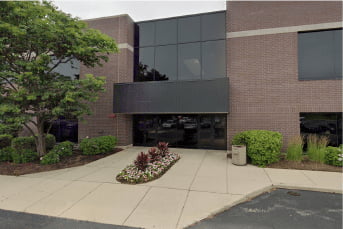
Naperville Office


From our office in Naperville, we provide legal help to clients in communities throughout DuPage County, Will County, Kane County, Kendall County, DeKalb County, and Cook County, including Addison, Aurora, Bartlett, Bolingbrook, Carol Stream, Chicago, Des Plaines, Downers Grove, Elgin, Elmhurst, Evanston, Geneva, Glen Ellyn, Glendale Heights, Hinsdale, Joliet, Lisle, Lockport, Lombard, Oak Brook, Oswego, Palatine, Plainfield, Schaumburg, Skokie, St. Charles, Warrenville, West Chicago, Wheaton, and Woodridge.
Results listed are not a guarantee or indication of future case results.
©2026 Fay & Farrow 1730 Park Street, Suite 109, Naperville, IL 60563 630-961-0060

